A Fresh Look at The Stables
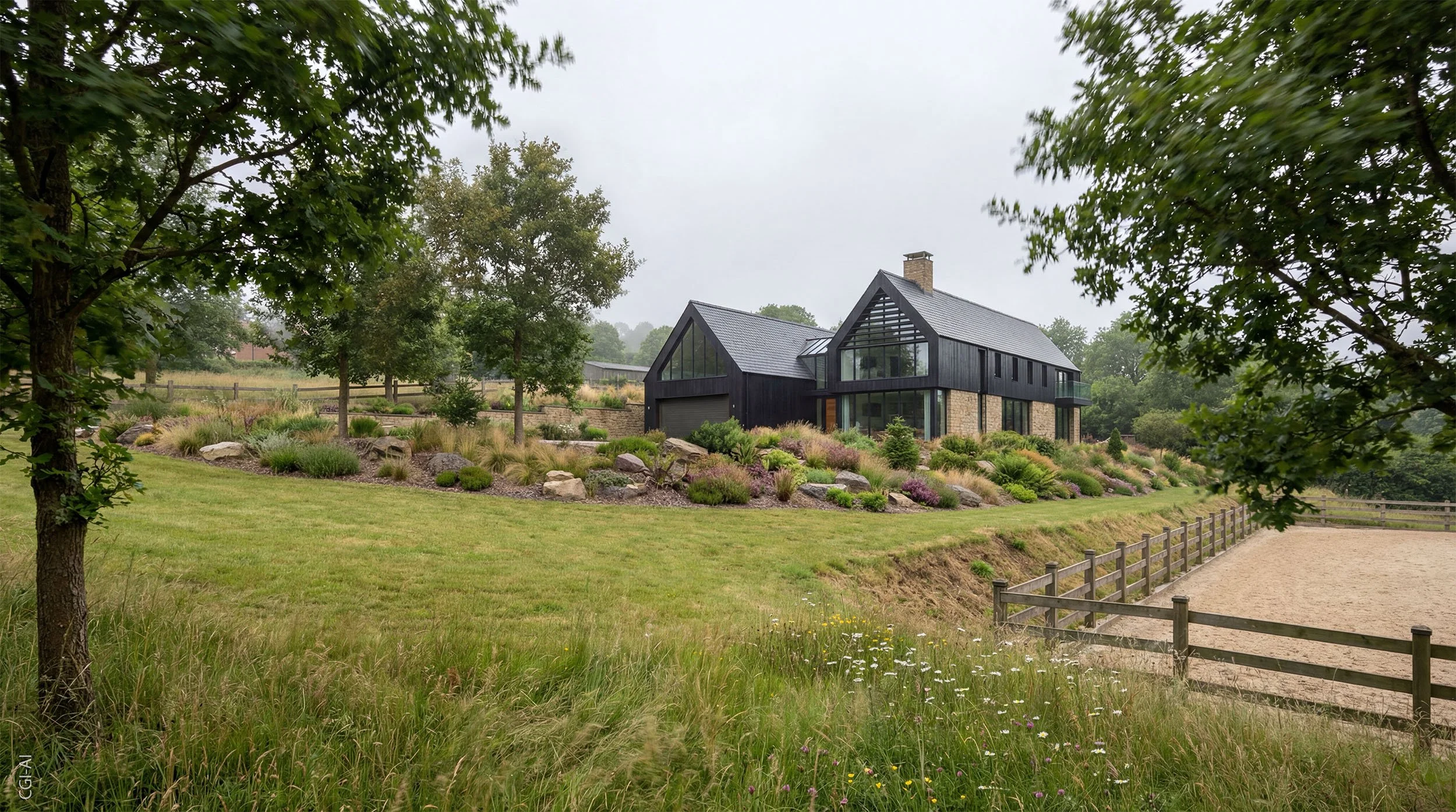
The Stables New Build House (Latest CGI/AI Artist’s Impression)
From time to time, we revisit older projects.
Not because the architecture has changed, but because the way we can communicate it has.
Recently, we returned to one of our Derbyshire projects — The Stables at Cotton Mill Hill in Holymoorside — to update its imagery using the latest visualisation tools.
The result is a new set of illustrations that present the architecture and its landscape setting with far greater clarity.
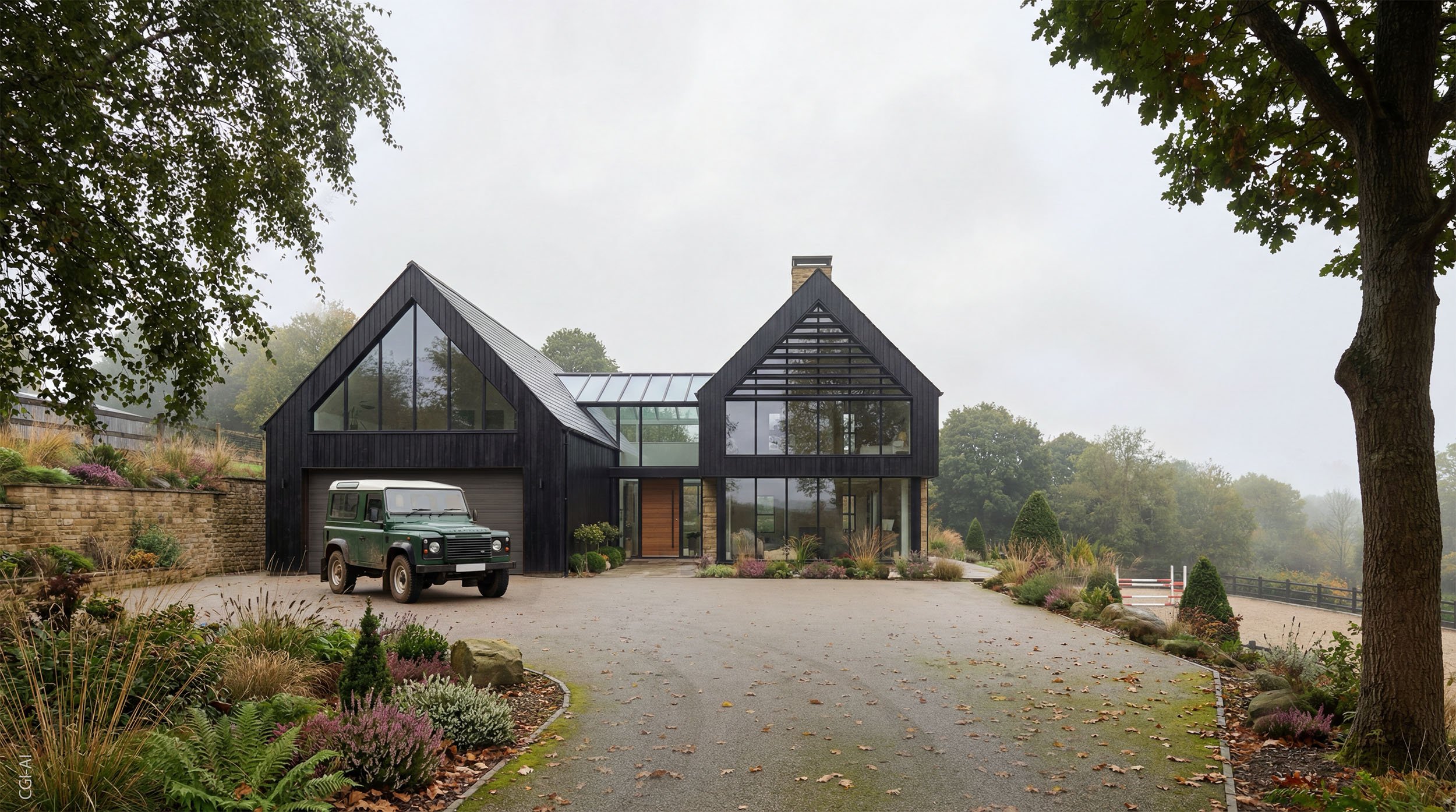
The Stables Entrance (Latest CGI/AI Artist’s Impression)
A House Inspired by Agricultural Buildings
The design of The Stables draws inspiration from traditional rural buildings.
Rather than a single large house dominating the hillside, the proposal is composed of stable-like forms that step along the contours of the site. This approach allows the building to sit more comfortably within the Derbyshire landscape while creating a sequence of connected living spaces internally.
The architecture is intentionally restrained.
Simple forms, carefully proportioned openings and a limited palette of materials help the building feel robust and grounded. Qualities inspired by the agricultural buildings that informed the design.
You can explore the project in more detail here:
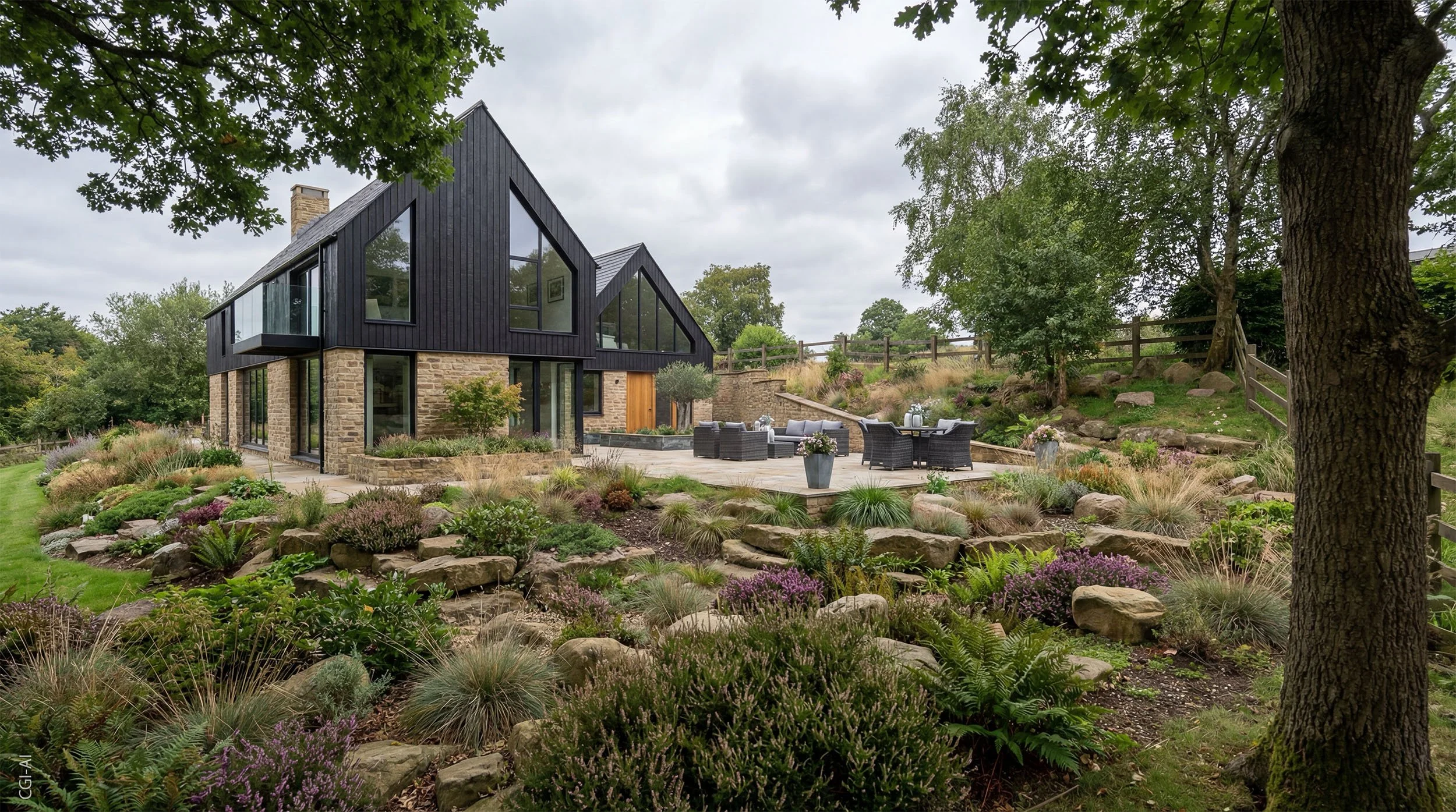
The Stables Rear View (Latest CGI/AI Artist’s Impression)
Updating the Visuals
When this project was originally illustrated, we used a fairly typical architectural visualisation CGI process.
Since then, the tools available to architects have advanced considerably.
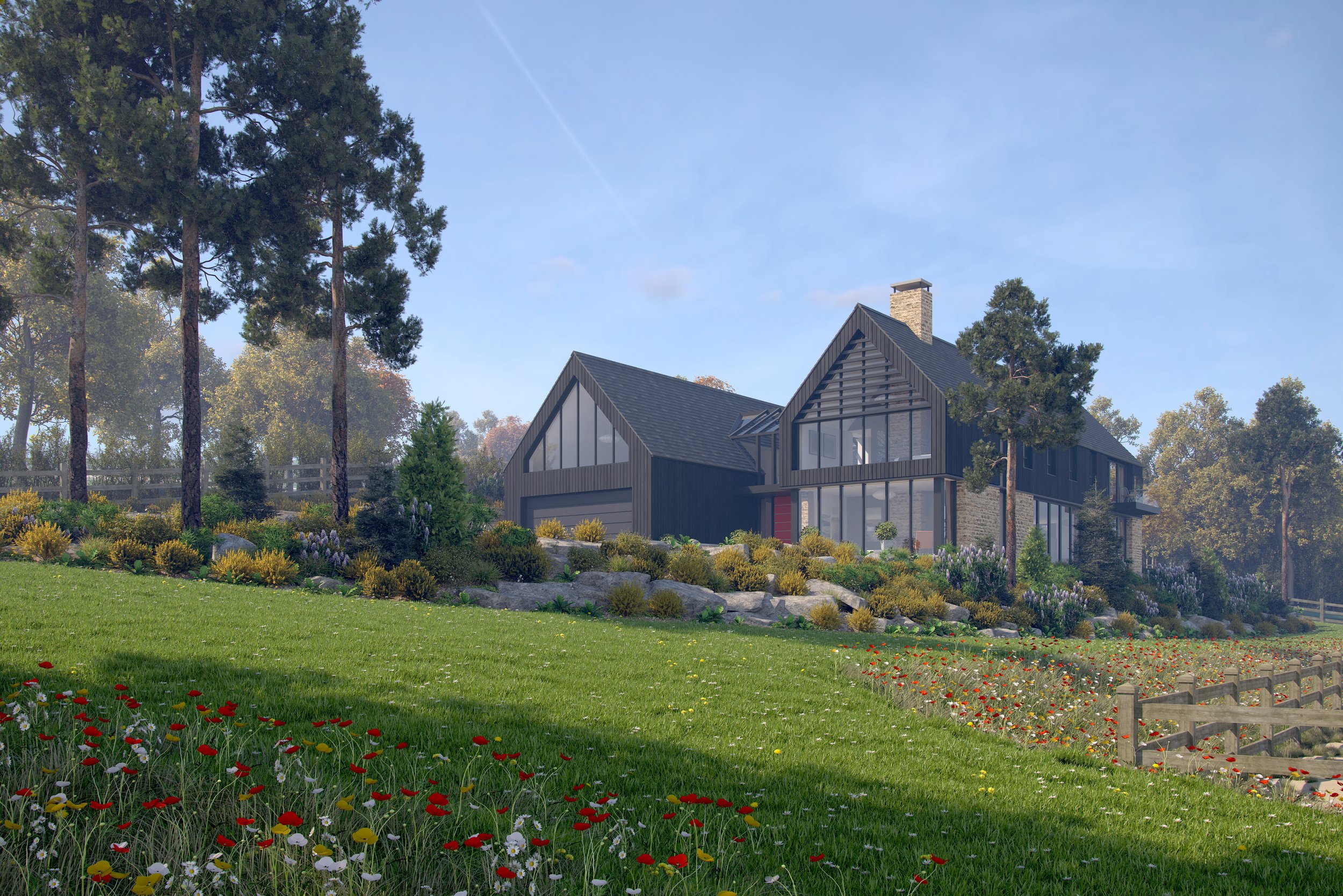
A previous CGI image (using our in-house Sketchup/Vray workflow)
Today, we combine detailed architectural modelling with CGI techniques and carefully guided AI enhancement. This allows us to produce imagery that feels much closer to architectural photography — capturing subtle qualities of light, material and landscape that were previously difficult to convey.
Revisiting The Stables provided an ideal opportunity to test this evolving workflow.
The architecture itself hasn’t changed. What has improved is the clarity with which it can now be communicated.
Why This Matters for Clients
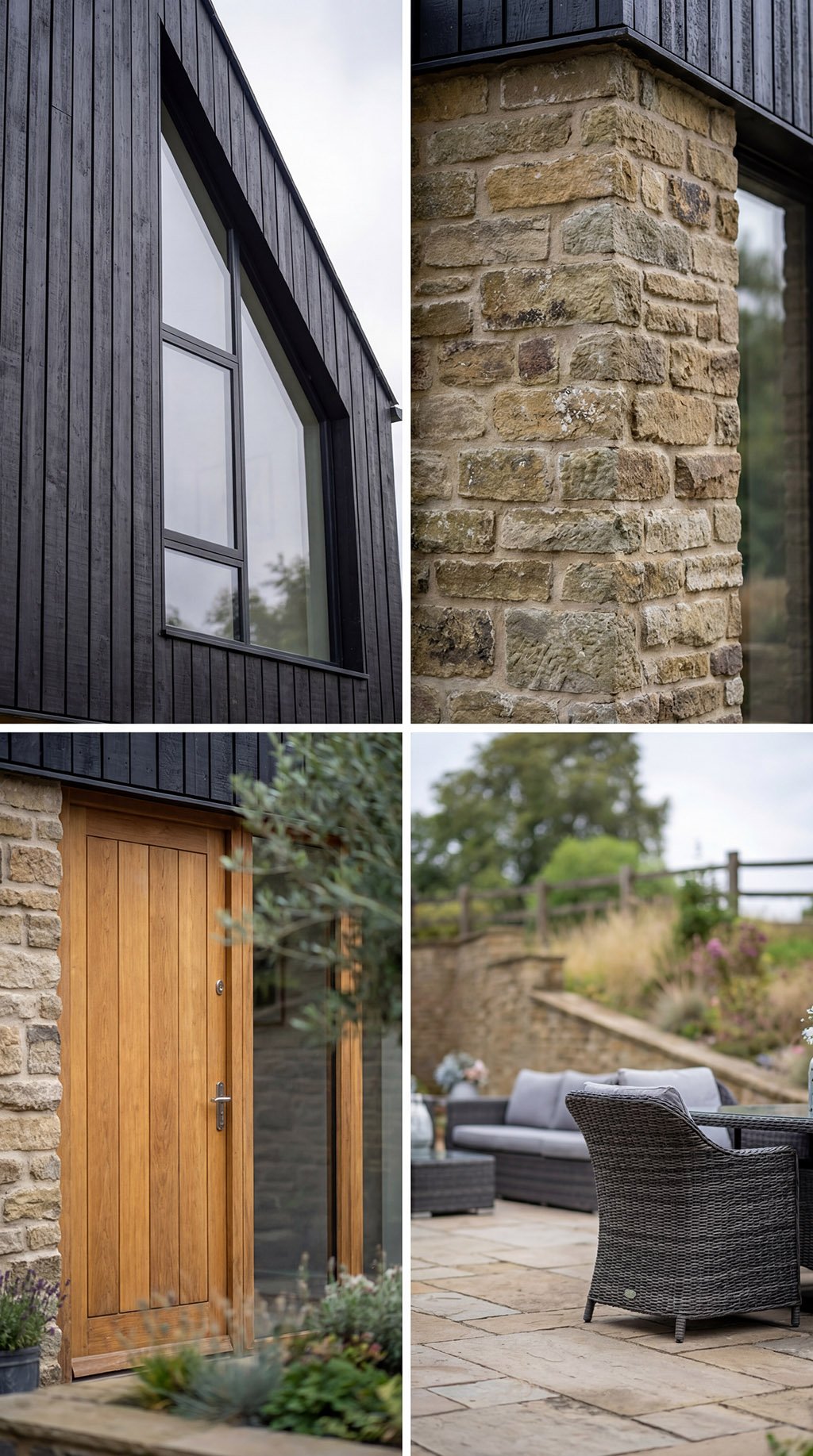
One of the biggest challenges when designing a new home is helping clients truly understand how it will look and feel once built.
Plans and elevations explain the arrangement of spaces, but they rarely capture the experience of the building.
High-quality visualisation helps bridge that gap.
By creating imagery that feels more natural and grounded in its setting, we can help clients make confident decisions earlier in the design process — whether about materials, proportions or how the house sits within its landscape.
Technology Is Only Part of the Story
Although the technology behind these images is evolving quickly, the process still begins where it always has: with the architecture itself.
Every visual starts with our detailed 3D design model. AI is used carefully and selectively to enhance realism while preserving the building's geometry and proportions.
It isn’t a one-click process, and we work hard to ensure the software doesn’t invent the architecture.
The design always comes first.
Real Projects, Real Clients
There is an increasing number of AI-generated architectural designs circulating online. Some of it is striking, but it is often unconstrained by the realities of planning, structure or construction.
That isn’t how we approach visualisation.
The images we produce represent real projects designed for real clients on real sites. The technology simply helps us communicate those ideas with greater clarity.
Looking Ahead
Visualisation tools will continue to evolve rapidly.
New platforms appear regularly, each promising faster workflows and greater realism. Our own process already draws on a mix of architectural modelling software, CGI techniques and AI-assisted tools, and that toolkit will undoubtedly continue to develop.
But the principle behind it remains unchanged.
These images exist to help clients understand their project and make better decisions during the design process.
After all, as we often remind our clients:
“It is always far easier — and far cheaper — to move a wall on screen than after it has been built.”
Explore the project:
The Stables — Cotton Mill Hill, Holymoorside, Derbyshire
Other Projects You Might Be Interested in
New Hampton: Ravenshead, Nottinghamshire. A large new build home (almost complete).
The Pines: Alwoodley, Leeds. A back-to-brick, renovation and extensions (on-site now).
The Avenue: Wakefield. Bungalow conversion to a modern family home.